
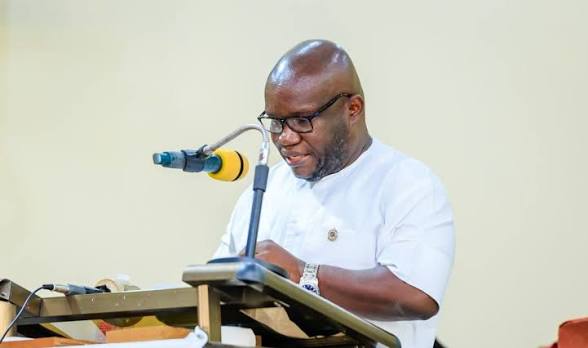
The Chief Executive Officer of the Ghana Chamber of Mines and Convenor of the Media Coalition Against Illegal Mining, Dr Kenneth Ashigbey, has disclosed that refining gold in Ghana currently costs more than refining the mineral in some foreign jurisdictions.
He said the cost disparity remains one of the major challenges confronting Ghana’s efforts to retain more value from its gold resources through local refining.
Dr Ashigbey, however, said the higher cost should not discourage the country from pursuing local refining, stressing that Ghana must develop the capacity and systems needed to make the industry internationally competitive.
His comments come amid efforts by the Ghana Gold Board (GoldBod) to increase domestic gold refining as part of a broader strategy to move Ghana from exporting largely unrefined gold to retaining greater value within the domestic economy.
In January 2026, GoldBod signed an agreement with Gold Coast Refinery and South Africa’s Rand Refinery to refine one metric tonne of gold locally every week. The partnership is also expected to support Ghana’s efforts to secure London Bullion Market Association (LBMA) accreditation for local refining operations.
According to Dr Ashigbey, although the Chamber supports the local refining agenda, the economics of refining in Ghana must be carefully considered to ensure that the policy does not undermine the competitiveness and sustainability of the mining industry.
He noted that large-scale mining companies have already demonstrated their commitment to the development of local refining capacity, including by accepting additional costs in the short term to help local refineries build the capacity required to meet international standards.
The Chamber of Mines has been engaging local refineries as part of efforts to strengthen Ghana’s gold value chain. The Chamber has previously said the objective is to develop internationally recognised refining capacity that would allow more gold to be processed domestically and increase the value retained in the country.
Dr Ashigbey said the long-term objective should therefore be to reduce the cost of local refining as capacity, technology and efficiency improve.
He stressed that Ghana’s mining industry must move beyond the extraction of minerals and focus on creating industries, jobs, technology and skills around the entire mining value chain.
The push for local refining forms part of Ghana’s broader effort to maximise the economic benefits of its gold resources. GoldBod has argued that keeping refining activities in Ghana would help retain refinery charges that are currently paid to facilities in countries including Dubai, Switzerland, India and Hong Kong.
The GoldBod-Gold Coast Refinery arrangement also gives Ghana a 15 per cent equity stake in Gold Coast Refinery, while the refinery has indicated that it can produce gold with purity of up to 99.999 per cent and has capacity of up to 100 metric tonnes annually.
Dr Ashigbey maintained that despite the initial cost challenges, building a credible and internationally accredited refining industry remains important if Ghana is to capture more value from its gold and strengthen its position in the global mineral value chain.
Source: Newspyramid.com
