
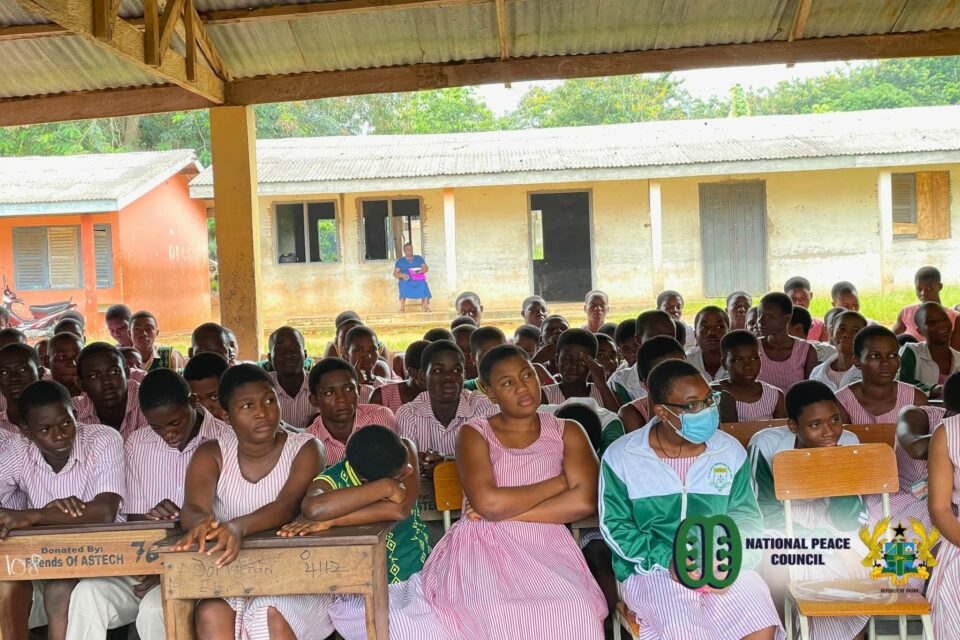
The National Peace Council, through its Volta Regional and Ashanti Regional Peace Councils, has intensified efforts to promote peaceful coexistence among young people by organizing separate peace education programs for students in the Volta and Ashanti regions.
The engagements, held at Alavanyo Senior High Technical School in the Volta Region and Mancell Girls Senior High Technical School in the Ashanti Region, formed part of the Council’s broader initiative to equip students with conflict resolution skills and inspire them to become ambassadors of peace within their schools and communities.
At Alavanyo Senior High Technical School, students participated in a Peace Education Program on Understanding Conflict and Building Peaceful Co-existence, where they were trained in effective communication, active listening, negotiation, empathy and peer mediation to help them manage conflicts peacefully.
Addressing the students, the Volta Regional Executive Secretary of the National Peace Council, Dr. David Esinu Yao Normanyo, emphasised that conflict is a natural part of human interaction but should never result in violence.
He encouraged the students to embrace dialogue, mutual respect and understanding as effective tools for resolving disagreements instead of resorting to anger, bullying or intolerance. Dr. Normanyo further urged them to see themselves as peace ambassadors capable of transforming their schools and communities through positive attitudes and responsible behaviour.
Meanwhile, more than 520 students of Mancell Girls Senior High Technical School in the Ashanti Region benefited from a peace education and conflict prevention sensitisation programme organised by the Ashanti Regional Peace Council in collaboration with the Small Arms and Light Weapons Commission (SALW).
The programme focused on educating students on the Vigilantism and Related Offences Act, 2019 (Act 999), the consequences of student violence, and the dangers associated with the illegal possession and misuse of small arms and light weapons.
Senior Programmes Manager of the Ashanti Regional Peace Council, Mr. Godwin Nana Amponsah, reminded the students that lasting peace begins with individual attitudes, words and actions. He noted that violence often stems from intolerance, uncontrolled anger and poor communication, and cautioned students against engaging in acts that resemble vigilantism, stressing that such conduct constitutes a criminal offence under Act 999.
The Ashanti Regional Director of the Small Arms and Light Weapons Commission, Mr. Emmanuel Kenneth Oduro, also warned students against the possession and use of illegal firearms, explaining that the proliferation of small arms contributes to fear, insecurity and the loss of innocent lives.
He urged the students to reject all forms of violence, obey the laws of the country and contribute to creating safer schools and peaceful communities.
The National Peace Council reaffirmed its commitment to strengthening peace education across the country, noting that empowering young people with conflict resolution skills is essential to building a peaceful, tolerant and united Ghana.
Source: Newspyramid.com
